

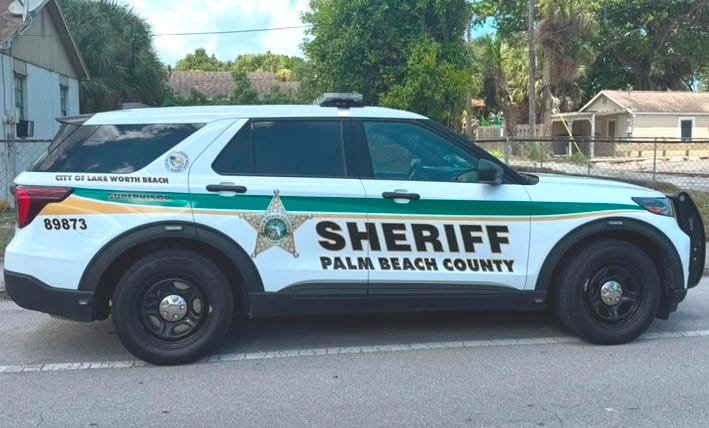
AMID A BACKDROP of intense public outcry over federal immigration enforcement tactics in Lake Worth Beach, city commissioners agreed Tuesday night to modify a proposed law enforcement contract with the Palm Beach County Sheriff’s Office.
But the changes, tentatively scheduled to be brought back to the commission Aug. 25, fail to satisfy immigrant advocates demanding that PBSO cut ties with U.S. Immigration and Customs Enforcement and the Florida Highway Patrol.
A majority of commissioners refused to request any changes to PBSO’s 287(g) partnership with ICE, citing a state law requiring deputies to assist ICE and FHP.
PBSO Capt. Terrence Carn insisted PBSO does not conduct immigration sweeps at schools, churches or workplaces and does not racially profile. Immigrant advocates led by the Lake Worth Beach-based nonprofit Guatemalan-Maya Center dispute that claim and told commissioners that aggressive immigration enforcement actions have eroded public trust of local police.
Among the changes commissioners agreed to after nearly four hours:
A three-year contract, not the 10 years PBSO is seeking. After Commissioner Chris McVoy criticized the 10-year length, Vice Mayor Mimi May suggested a three-year deal, citing “uncertainty” over the potential effects of the homestead exemption question on the November ballot.
More foot patrols, especially downtown. “The visibility of the downtown cop that you know is important,’’ Mayor Betty Resch said.
A crack down on aggressive panhandlers. Commissioner Anthony Segrich said some business owners and visitors have been “verbally and physically” assaulted. “That can’t continue,’’ he said. “It’s a primary driver of people not feeling safe when they come here.”
Adding five park rangers, a new $500,000 program, will also be part of the PBSO contract, which will cost about $15.8 million in its first year, with subsequent annual cost updates made every October.
But commissioners requested several changes to that program. Among them: Requiring the civilian rangers to wear body cameras, carry Narcan and patrol in the early-morning hours instead of starting at 11:30 a.m. as PBSO proposed.
The rangers will patrol city parks and the downtown Cultural Plaza by car, bicycle and foot. They will wear uniforms different from what deputies wear and they will not have arrest powers.
“In two or three years from now, people are going to love the fact that they know their park ranger. They’re going to love the fact they are feeding squirrels and they’re talking to the park ranger,’’ Commissioner Sarah Malega said.
McVoy said he didn’t agree with that “warm and fuzzy” view of park rangers and suggested the commission spend the $500,000 on other needs.
And he noted that the commission hasn’t seen images of the park ranger uniforms.
“I can tell you that most people in this community don’t distinguish between FHP, ICE and PBSO. It’s all cops. There’s no way, unless you’re going to put them in pink uniforms, that people are going to distinguish them from cops,’’ McVoy said.
Other commissioners defended PBSO and credited deputies with keeping the community safe and developing bonds with students in schools.
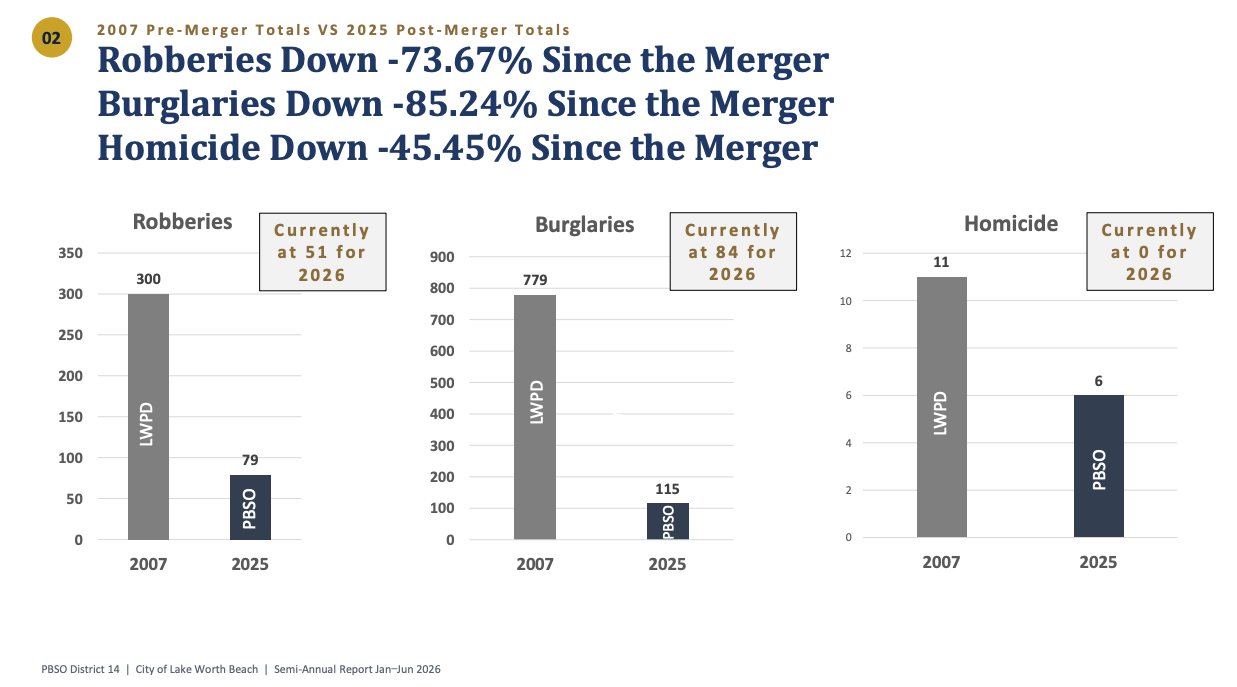
Carn offered a presentation showing how serious crime has dropped in Lake Worth Beach since PBSO merged with the city police department in 2008.
McVoy, a vocal critic of ICE, referred to those statistics later in the meeting when he challenged claims that immigration agents are only going after violent criminals.
“If local law enforcement is doing such a good job on the real bad-guy crime, why do we need federal immigration to get the real bad-guy crime?’’ he asked.
He criticized ICE and FHP for not sharing complete data of their Lake Worth Beach operations and said it’s up to PBSO, as a city contractor, to get that information.
“Find a way to get it from the other agencies,’’ he said, “or get them the hell out of this city.’’