
See a purple card floating in Lake Worth Lagoon? You just found a science experiment
ANGARI Foundation's 15th Lake Worth Lagoon Drift Card Study tracks how marine debris travels throughout South Florida's coastal waterways

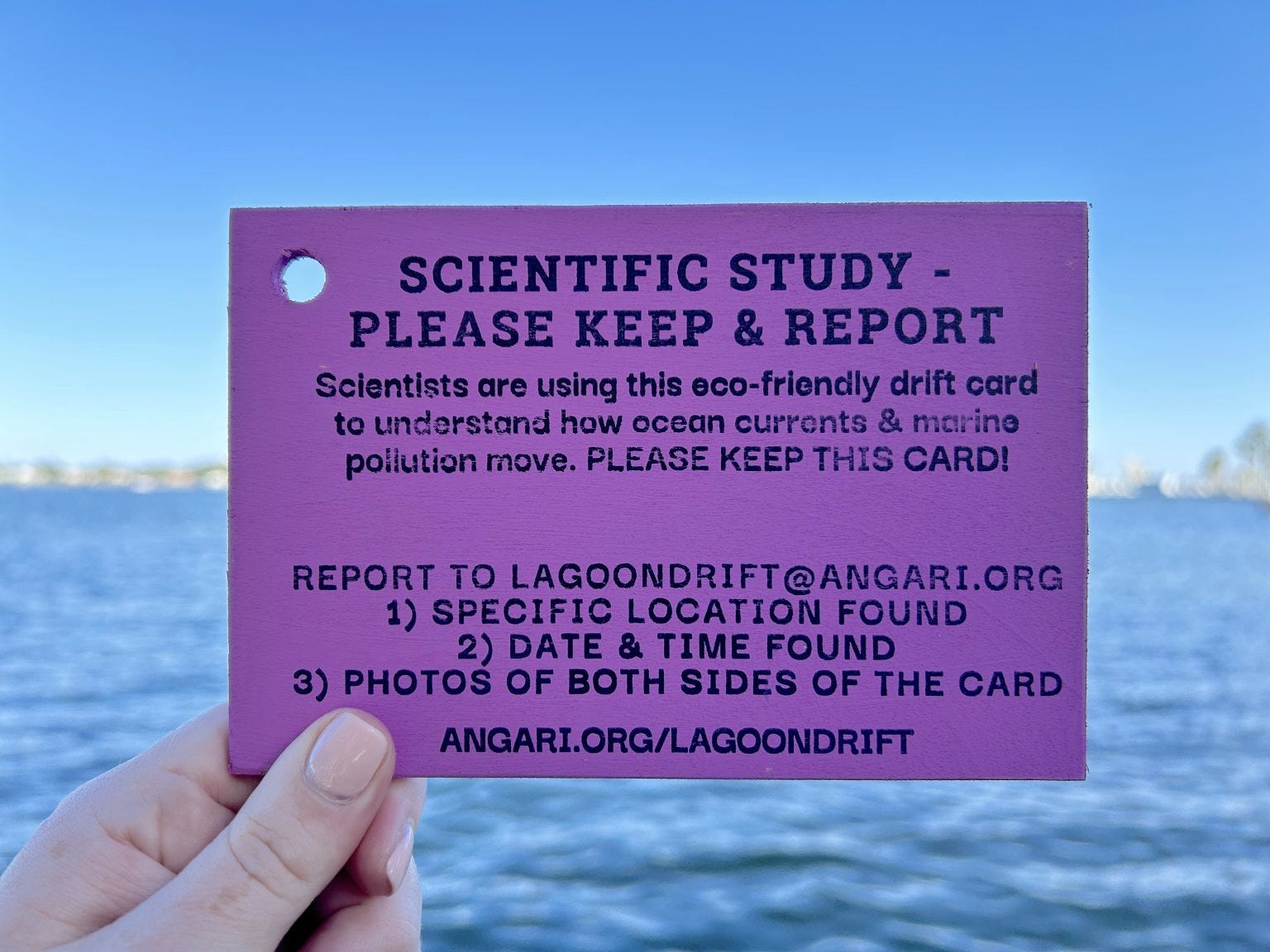
CALLING ALL VISITORS to the Lake Worth Lagoon: Be on the lookout for hundreds of floating purple cards.
If you find one, you’ve stumbled onto a research mission by citizen scientists studying how debris moves through inland waterways and accumulates on the coastline.
The 15th Lake Worth Lagoon Drift Card Study kicked off May 1 when volunteers deployed 320 bright purple cards made of thin biodegradable wood at eight different sites in Palm Beach County — from Burt Reynolds Park in Jupiter to Silver Palms Park in Boca Raton.
Another 240 cards, yellow and white, were tossed into the Indian River Lagoon from six sites on the Treasure Coast from Port Salerno to Cocoa Beach.
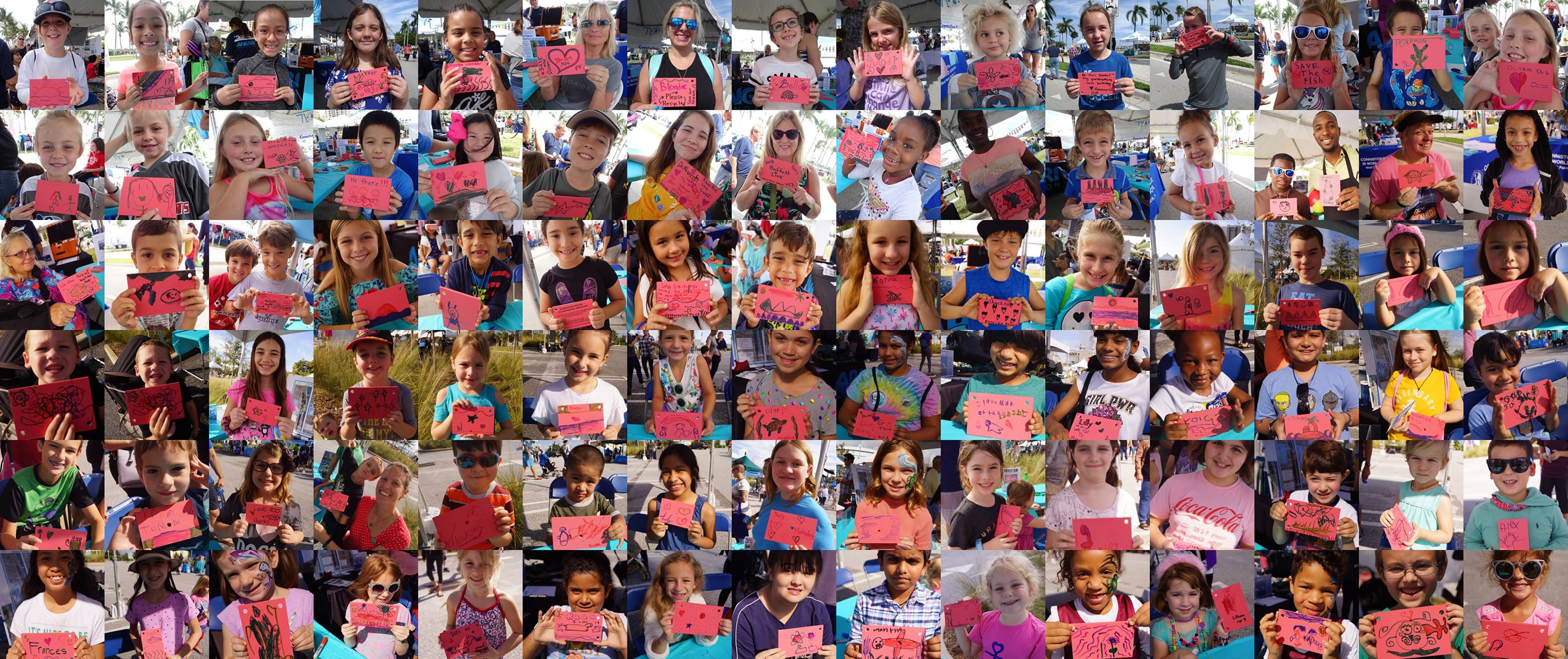
Researchers hope the cards, many decorated by students and children, will offer insight to the routes traveled by marine debris and where the watery trash accumulates.
Enlisting volunteer scientists to collect the cards helps raise awareness.
“It’s super important for us to look after the waterways,” said Laura Jessop, Community Outreach Programs and Education Manager with ANGARI Foundation, a West Palm Beach marine science nonprofit.
The foundation has conducted the so-called “Lagoon Drift” card studies since 2017 as an extension to “Bay Drift,” a Biscayne Bay study conducted by University of Miami scientists..
“Lagoon Drift is important because it provides people with knowledge of where they live and it gives them an opportunity to look after and protect the environment that they reside in and recreate in,” Jessop said.
“This is a really good study that allows people to do that while contributing to science and providing us with valuable data.”
Here’s a short ANGARI (ANNE-JAR-EE) Foundation video of just-released drift cards in Jupiter:
Cards in past ANGARI studies have been found as far north as New Smyrna Beach, as far south as the Hillsboro Inlet in Pompano Beach and in unusual spots like residential backyards not far from seawalls.
In the latest study, 22 percent of the 4-by-6-inch cards have been recovered and reported so far. The cards dissolve after three weeks in the water.
If you find a card while visiting the region’s shorelines and waterways, follow the instructions on the back:
Note the specific day, time and location of where you found the card.
Take photos of both sides of the card.
Email it to lagoondrift@angari.org.
When you’re done, either keep it or toss it in the trash. Do not throw it back into the water.
Purple cards were also deployed at the C-17 canal in North Palm Beach, Manatee Lagoon in Riviera Beach, the downtown West Palm Beach docks on the Intracoastal Waterway, the C-51 canal that separates West Palm Beach and Lake Worth Beach, and the C-16 canal in Boynton Beach.
Check out ANGARI’s interactive dashboard and map to access data from previous experiments conducted from 2017 to 2025.
Editor’s note: This story was published in partnership with Stet News.