
'It was like an Apollo 13 event for us'
How Lake Worth Beach Electric Utilities kept the heat on during Florida’s historic cold snap earlier this month


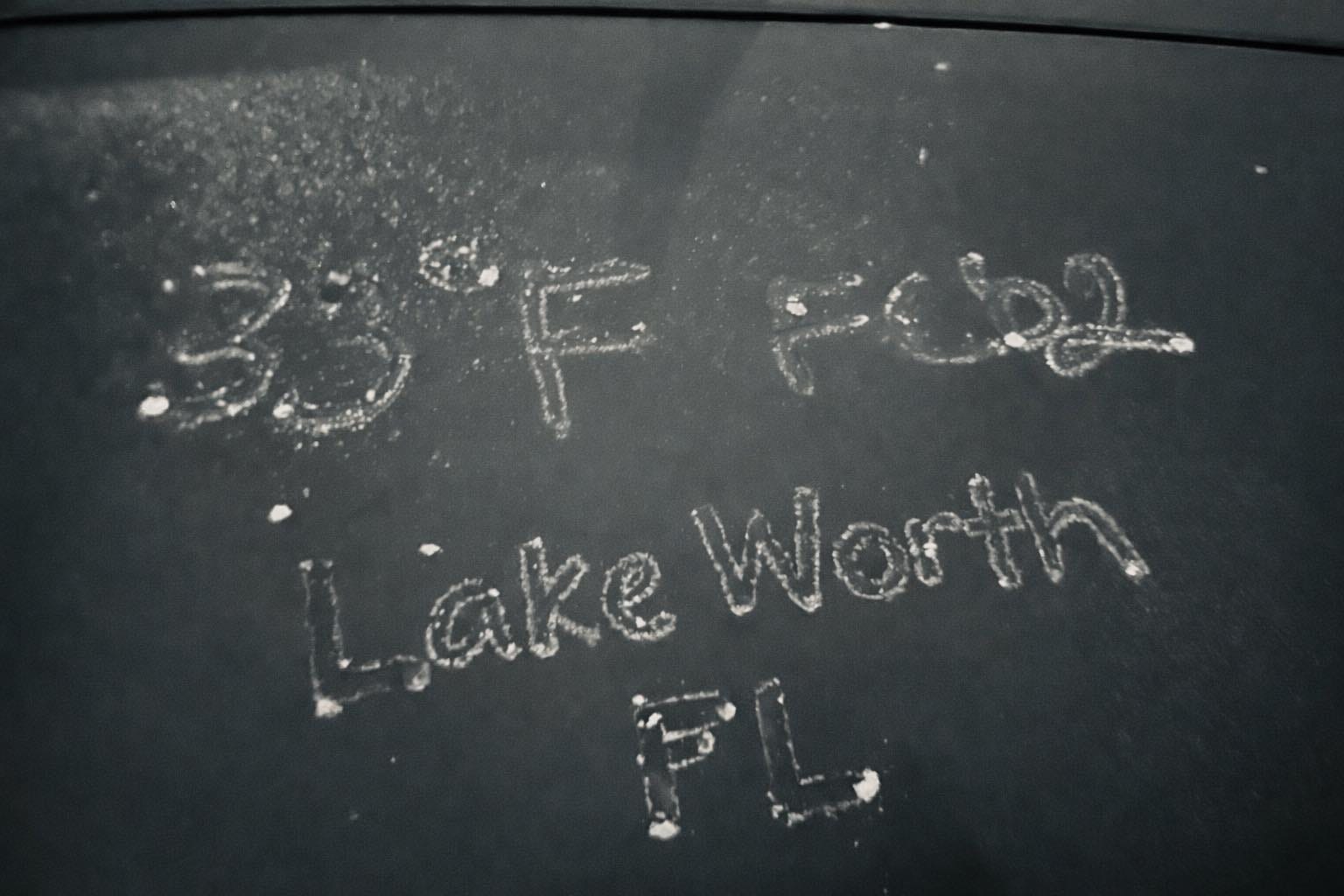
LIKE MOST SOUTH FLORIDIANS, Lake Worth Beach residents had a simple remedy for that nasty Arctic air that sent temperatures plunging into the low 30s on Feb. 1 and Feb. 2.
We stayed inside and cranked up the heat.
Behind the scenes, though, making sure the heat stayed on was no easy task for Lake Worth Beach Electric Utilities and the other regional energy providers in the Florida Municipal Power Pool, a group of utilities that share power with each other during peak demand.
Unknown to most customers: As record lows strained the electric grid with record demand from millions of shivering Floridians, Lake Worth Beach and other utilities were brought to the brink of temporarily cutting power though rotating blackouts.
At Lake Worth Beach Electric Utilities, which since 2018 has been replacing electric equipment that dates to the 1960s and ‘70s, it required some creative outside-the-box thinking that helped the pool avoid blackouts and keep the heat on for millions of Floridians.
“It was like an Apollo 13 event for us,’’ said Ed Liberty, the utility’s director.
Electricity usage in the Sunshine State spikes during cold weather because heating systems in most Florida homes are generally less efficient than air conditioning. While summer typically produces long-lasting periods of high demand, winter cold snaps often generate the highest daily peaks.
Area temperatures fell to 31 degrees Feb. 1 — shattering a record set in 1909 — and 30 on Feb. 2. But overall, Lake Worth Beach, the only Palm Beach County municipality with its own electric utility, performed “extremely well,” Liberty said. Only three minor outages were reported, none related to the cold snap.
But nearly every other Florida utility experienced outages when power generation units malfunctioned in freezing temperatures and high winds, creating an urgent emergency for the electric grid.
As a result, the North American Electric Reliability Corporation — a regulatory authority designated by the federal government to oversee the electrical grid — required Florida’s Municipal Power Pool utilities to take measures to prevent cascading outages across the grid.
Most residents and businesses in South Florida were likely aware of just one measure — a request sent out via the Everbridge mass notification system to voluntarily lower thermostats to 68 degrees for four hours on the mornings of Feb. 1 and Feb. 2. The requests were issued by electric utilities across Florida, including Lake Worth Beach.
It’s not known how many of Lake Worth Beach’s 28,000 customers complied with the requests, Liberty said. But those who did helped the pool avoid “load shedding events,” industry lingo for mandated blackouts that would have prevented Floridians from running their heating systems for 15 minutes at a time during the day’s coldest weather.
Publix helped, too. The chain’s nearly 900 Florida supermarkets switched to generators during those peak periods.
Each electric utility in Florida performed internal strategies that helped prevent blackouts. Among the measures taken by Lake Worth Beach:
The city’s water plant, Palm Beach County Sheriff’s Office substation and other facilities switched to emergency generators from 6-11 a.m. Feb. 2.
Thermostats were lowered to 55 degrees during those hours at City Hall, the Lake Worth Beach Golf Club, Public Works complex, beach casino complex, and Norman J. Wimbley Gymnasium.
Electric vehicle charging stations around town were temporarily disabled.
Equipment that was out of service for regular maintenance ahead of summer months was quickly reassembled and put back online.
60-year-old power units capable of using oil fuel were put back in action “as a last line of defense,’’ Liberty said.
Three former city electric utility employees, who had transferred to other city departments years earlier, reported for duty at the power plant to assist the two technicians working over the weekend.
“Without those three individuals coming back to the power plant and helping, we would not have been able to keep the lights on,’’ Liberty said.

There were a few dicey moments, he said.
When glitches prevented some power units from operating, staff members scavenged spare parts from retired equipment to get the units working.
“Staff was able to troubleshoot and used very creative workarounds to get around control system lockouts,’’ Liberty said, comparing the work of the power plant staff to the Apollo 13 astronauts who got their crippled spacecraft back to earth in 1970.
“Those three individuals came to the conclusion that we were stuck and the last choice was to say, ‘Let’s go see if there’s parts on the retired units that matched.’ Lo and behold, they did,’’ he said.
Their quick thinking made a difference at a time when it seemed like rotating blackouts were inevitable, he said.
“The power pool was already at a point where it was stressed, within hours or conceivably even minutes of calling for a load shed event,’’ he said. “We were prepared to initiate rolling blackouts in 15-minute intervals. Fortunately, we didn’t have to do that.’’
Another factor in the utility’s success Feb 1-2: the city’s decision in 2018 to start dedicating millions of dollars to its System Hardening and Reliability Improvement Program.
Those ongoing projects include replacing outdated equipment with modern technology and making improvements capable of resisting Category 5 hurricanes.
“Absent the SHRIP improvements since 2018, we would have lost electric delivery to many sections of the city’’ on Feb. 1 and Feb. 2, Liberty said.
The upgrades are continuing as linemen and engineers go block by block making long-needed changes. But Liberty said the recent cold snap highlights the need for even more improvements.
“The extent of the problem was not readily appreciated by people, and frankly most people shouldn’t have to worry about these things happening,’’ Liberty told city commissioners on Feb 3.
Speaking about the rare voluntary energy conservation requests issued to customers across Florida, “It’s not a drill. It’s not meant to scare you. It’s serious stuff,’’ he said.
Mayor Betty Resch said most customers probably had no idea how close they came to losing power in rotating blackouts.
“It’s amazing,’’ she said, praising the city’s electric utilities workers. “We sit in our houses and thank God the electricity kept on. You don’t even realize that you guys, it’s like a duck above the water. It looks nice and smooth, and underneath all this work is going on. A few things made a big difference.’’
Time to go nuclear!