
Coming to LWB: Why the wreck of the Edmund Fitzgerald still resonates 50 years later
Author John U. Bacon explores the 'Great Lakes Titanic' mystery at a free lecture Tuesday, Feb. 17, at the Lake Worth Beach Library downtown

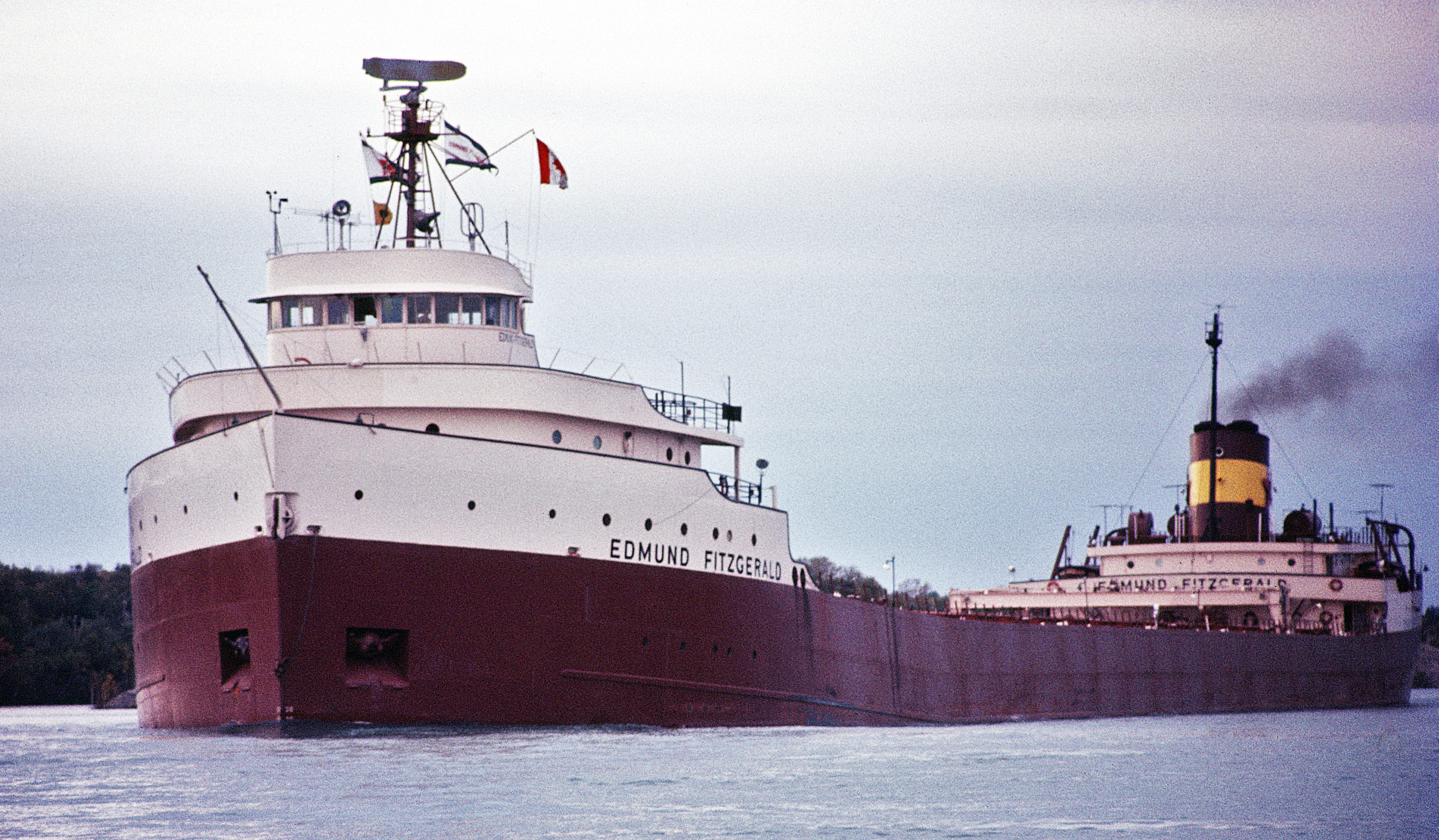
ON NOV. 10, 1975, the 729-foot freighter Edmund Fitzgerald vanished without a distress call during a violent gale on Lake Superior. All 29 men aboard were lost.
Most of us are familiar with the tragic story of the “Titanic of the Great Lakes” only because of the haunting Gordon Lightfoot ballad that memorialized the “pride of the American side,” a mighty ship thought to be unsinkable, loaded with “iron ore, 26,000 tons more…a bone to be chewed when the gales of November came early.’’
There may be no greater expert on the subject than John U. Bacon, the author of “Gales of November: The Untold Story of the Edmund Fitzgerald,” a New York Times best seller released in October for the 50th anniversary of the sinking.
Bacon will share insights about the Fitzgerald — its history, mystery and legacy along with poignant stories of its captain and crew — at 6 p.m. Tuesday, Feb. 17, at the Lake Worth Beach Municipal Library, 15 N M St.
The free lecture, open to the public, is sponsored by the University of Michigan Alumni Club of the Palm Beaches. Use the library’s Lucerne Avenue entrance. Copies of the book will be available for purchase and signing by Bacon.
The book tour, offering rich detail and poignant inside stories, has attracted hundreds of people since October both in the Great Lakes region and beyond.
“I’ve done 40 or 50 now around the country, and it’s pretty lively. No one gets on their phones, no one leaves,’’ Bacon, a Michigan grad (’84 BA, ’86 MA), said in an interview with the Lake Worth Beach Independent.
And he’s quick to give credit to the book where credit is due — Lightfoot’s 1976 sea shanty “Wreck of the Edmund Fitzgerald.”
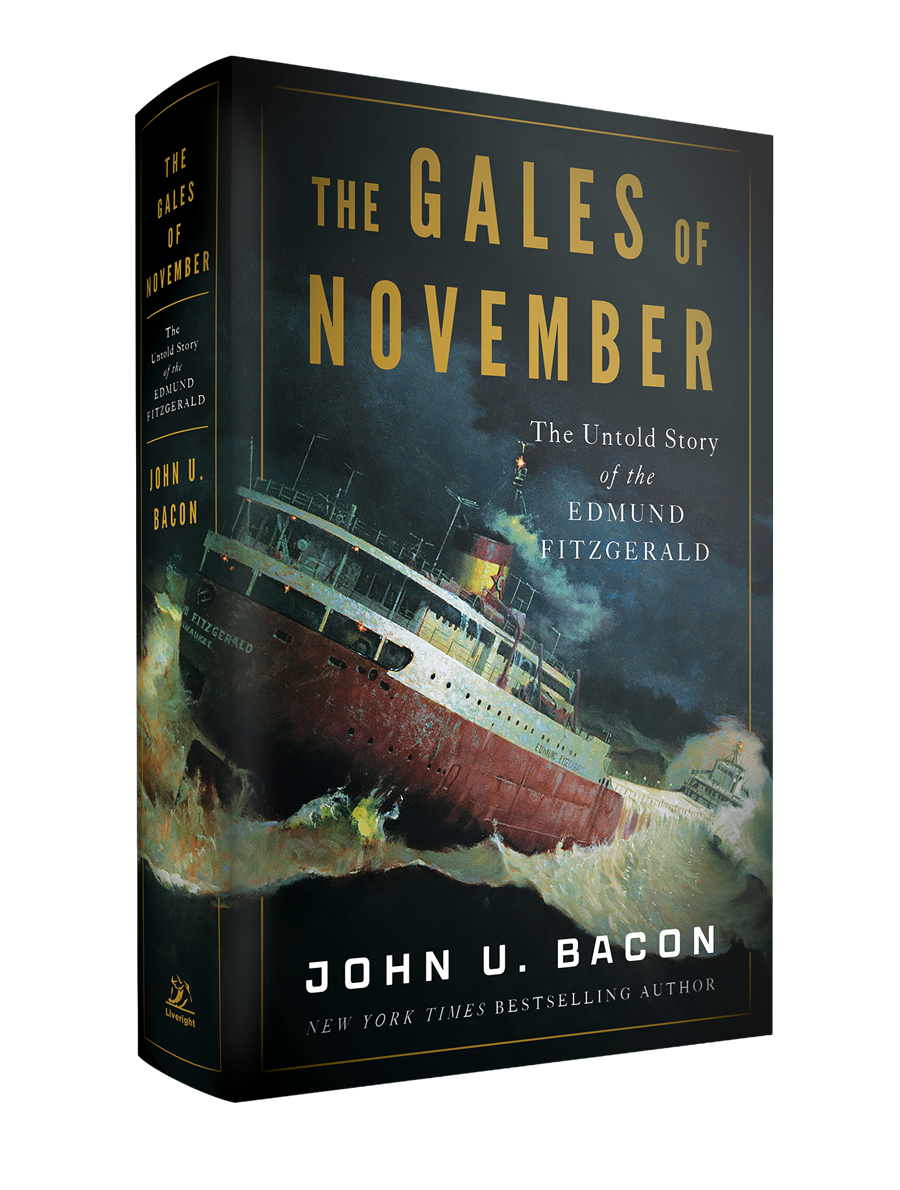
“As a journalist, I’ve got to be humble: Without the song there is no book,” Bacon said, offering “a stunning statistic” to support that contention.
“Between 1875 and 1975, there were 6,000 commercial shipwrecks on the Great Lakes. And everybody knows only one. It’s because of the Gordon Lightfoot song,’’ whose lyrics were inspired by a Newsweek magazine story about the wreck, he said.
“It’s probably the second most famous shipwreck, a distant second, I grant you, but still Number 2 behind Titanic. And the song spells it out,’’ he said.
While he devotes two chapters to the Lightfoot song — “its unlikely creation and its unlikely success,” he said, based on interviews with surviving band members — the book highlights how the tragedy shined a spotlight on the Great Lakes shipping and spawned safety improvements.
Among the many other nuggets Bacon will share:
The freighter was named after the president of Northwestern Mutual in Milwaukee, which owned the ship, at the time the largest on the Great Lakes.
Many sailors insist the Great Lakes are more dangerous to navigate than the Atlantic Ocean.
Detroit in the 1950s and ‘60s was the center of global industry, the “Silicon Valley” of its day.
Shipping is more efficient than trucking or trains.
Personal stories of the crew, including the captain, who was about to retire but took the final trip to help pay medical bills for his cancer-stricken wife.
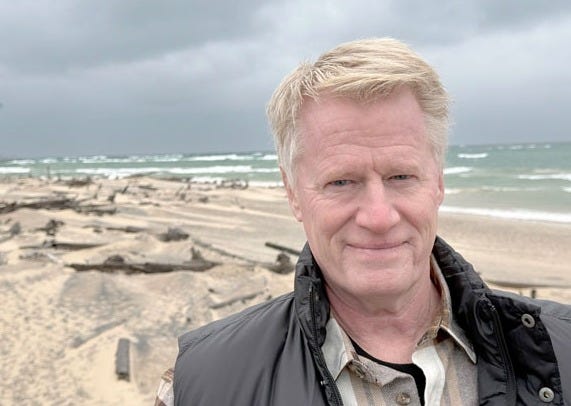
While the story of the Fitzgerald has universal appeal, Bacon said it seems to especially resonate in seafaring regions such as the Great Lakes, Seattle and South Florida, where boaters know to respect hurricanes.
“There’s something elemental about humans and boats fighting for their lives, ‘’ said Bacon, author of 14 books.
“The fact that this thing is still a mystery adds to it,’’ he said. “We can’t quite close the book on exactly what happened and will get into that, advance some theories and diminish others.’’
Like his book, Bacon’s Fitzgerald lectures are detailed with compelling anecdotes. Among them: How Lightfoot, who died in 2023, enjoyed piloting a 40-ft. Sailboat on Lake Superior and was familiar with its conditions in November.
On Nov. 10, 1975, Lightfoot was working at home in Toronto on a melody that would end up months being his shipwreck ballad. “While he was working, the wind was howling, even in Toronto,’’ said Bacon, whose book was excerpted last fall in Rolling Stone magazine.
Lightfoot had no idea that more than 600 miles to the west the Fitzgerald was in peril.
“He went down for some coffee, hours after the ship sunk,’’ Bacon said, “and said to himself, ‘Wow, it must be hell on Lake Superior tonight.’’’