
As temperatures drop, LWB electric rates rise; Customers are asked to lower thermostats Sunday, Monday mornings
'For every degree below 68, customers may save up to 5 percent on heating costs.’ city's electric utility says

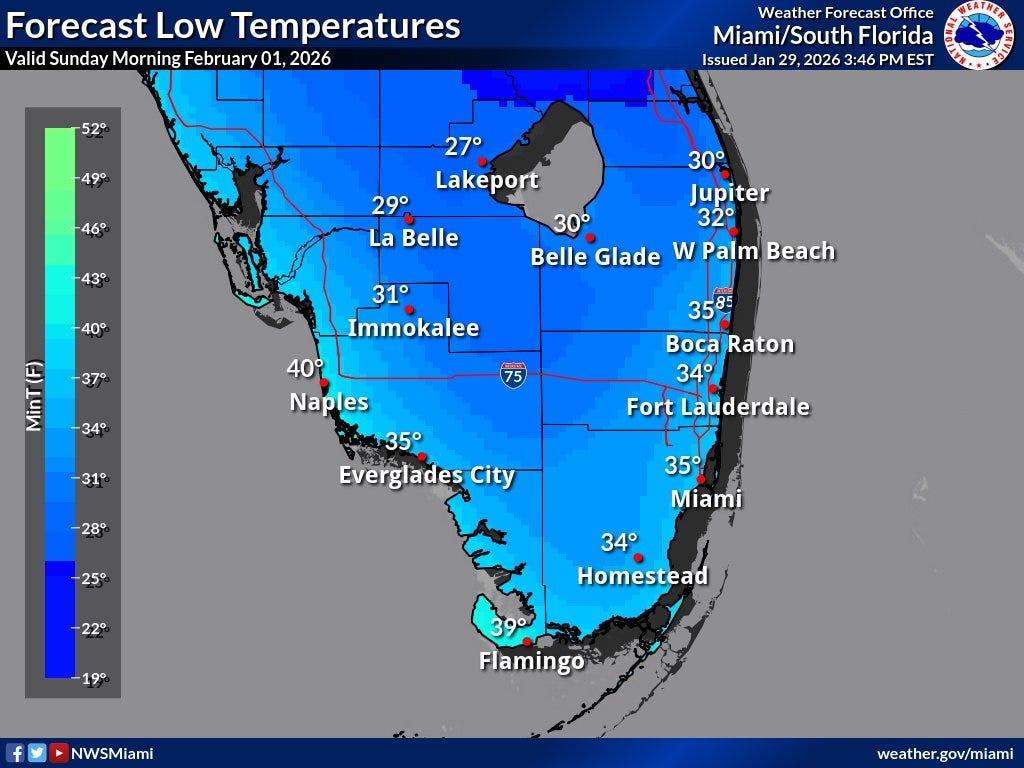
Extreme cold weather in South Florida is about to hit the pocketbooks and thermostats of Lake Worth Beach’s 28,000 electric utilities customers.
Less than a day after city commissioners approved an average monthly rate hike of $7 to help cover rising fuel costs, the electric utilities department issued a voluntary request to conserve energy during this weekend’s coldest periods.
From 6 a.m. to 10 a.m. Sunday and Monday mornings — when temperatures in Lake Worth Beach are forecast to be in the low 30s — customers are asked to set their thermostats to 68 degrees or lower when heating their homes.
Also during those hours: Do not use electric space heaters or charge electric vehicles and golf carts. Pool and spa heaters and filter pumps should be turned off.
“The cold conditions affecting much of the eastern United States, combined with the potential for record-high electricity usage across Florida, have led to increased energy costs,’’ the utility said in a statement Friday. “For every degree below 68, customers may save up to 5 percent on heating costs.’’
Electric utility director Ed Liberty said the city’s voluntary request is consistent with conservation requests from electric utilities across the Sunshine State, where the wind chills, or “feels like” temperatures, are expected to be in the single digits in parts of central and north Florida.
“It’s going to be cold,’’ he said at a City Commission meeting Jan. 29. “There’s going to be records set for electricity (usage). There is some concern that there could be a shortage of gas. The major concern is it’s going to be so expensive.’’
To illustrate that expense, he shared price fluctuations of a BTU, a standard energy measure called the British Thermal Unit.
“We normally pay under $5 (per million BTU). It’s over $50 for the weekend,’’ he said. “That means the power plants will be burning gas based on a spot price of over $50.’’
About half the electricity sold to the utility’s customers comes from natural gas. And natural gas costs have been rising since last year, Liberty said.
The electric utility’s Power Cost Adjustment fund had a $102,000 deficit in December because the utility spent more on fuel purchases than it made from customers since May, according to a report.
Liberty asked commissioners to raise the PCA by $6.44 per megawatt-hour. The commission decided to add more to the PCA by approving a $7 increase because of the uncertainty over natural gas prices.
Also this weekend, the city water plant and other city departments will run their generators on oil during peak hours to relieve the load on the electric system.