
A green giant falls in College Park
Safety concerns prompt removal of massive banyan, a leafy Fordham Drive landmark and one of Lake Worth Beach's largest trees

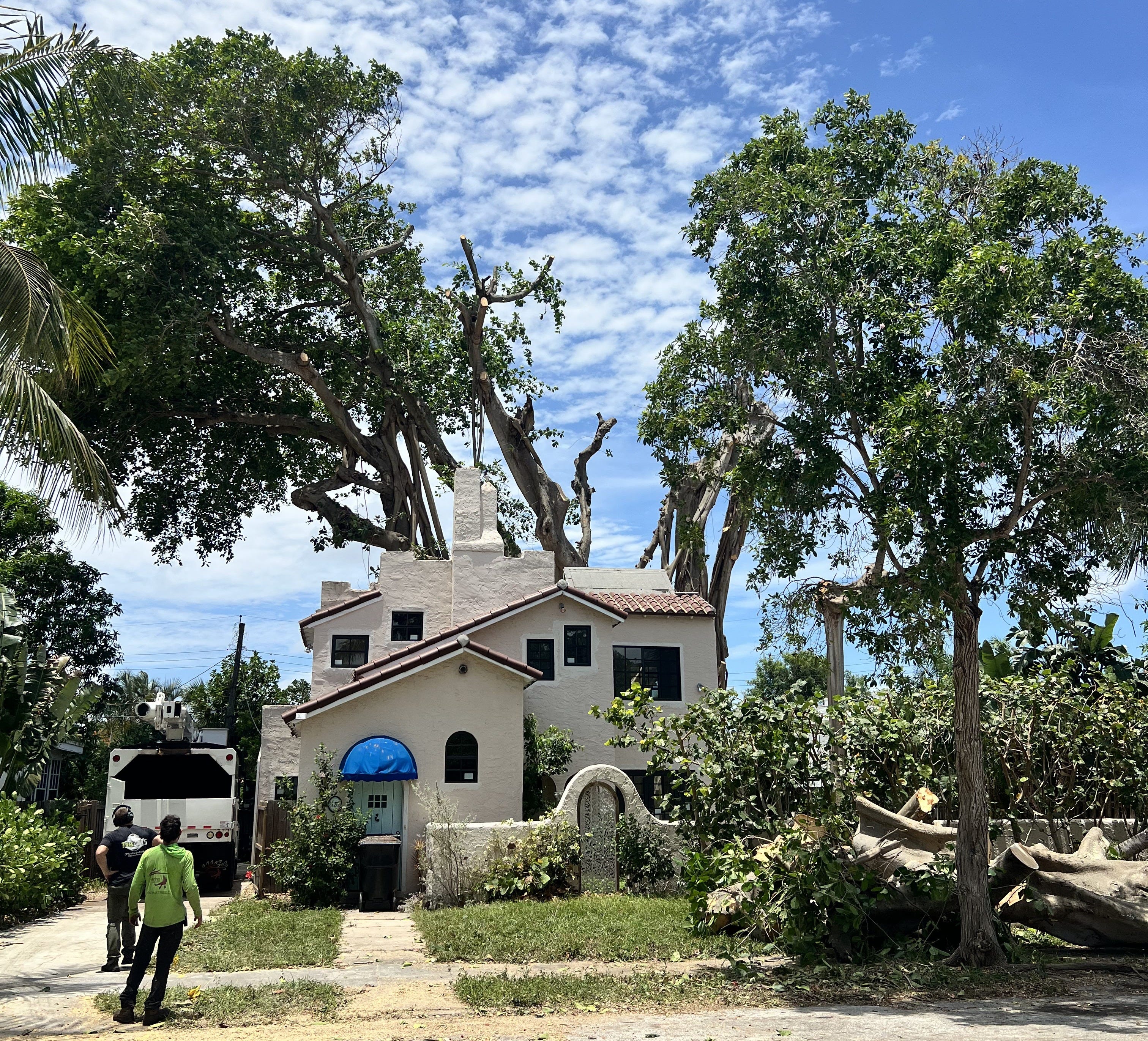
A NEIGHBORHOOD GIANT is coming down.
One of Lake Worth Beach’s largest trees, a massive invasive ficus that came to define a College Park street, is being removed this week after safety concerns forced the city to approve its chopping.
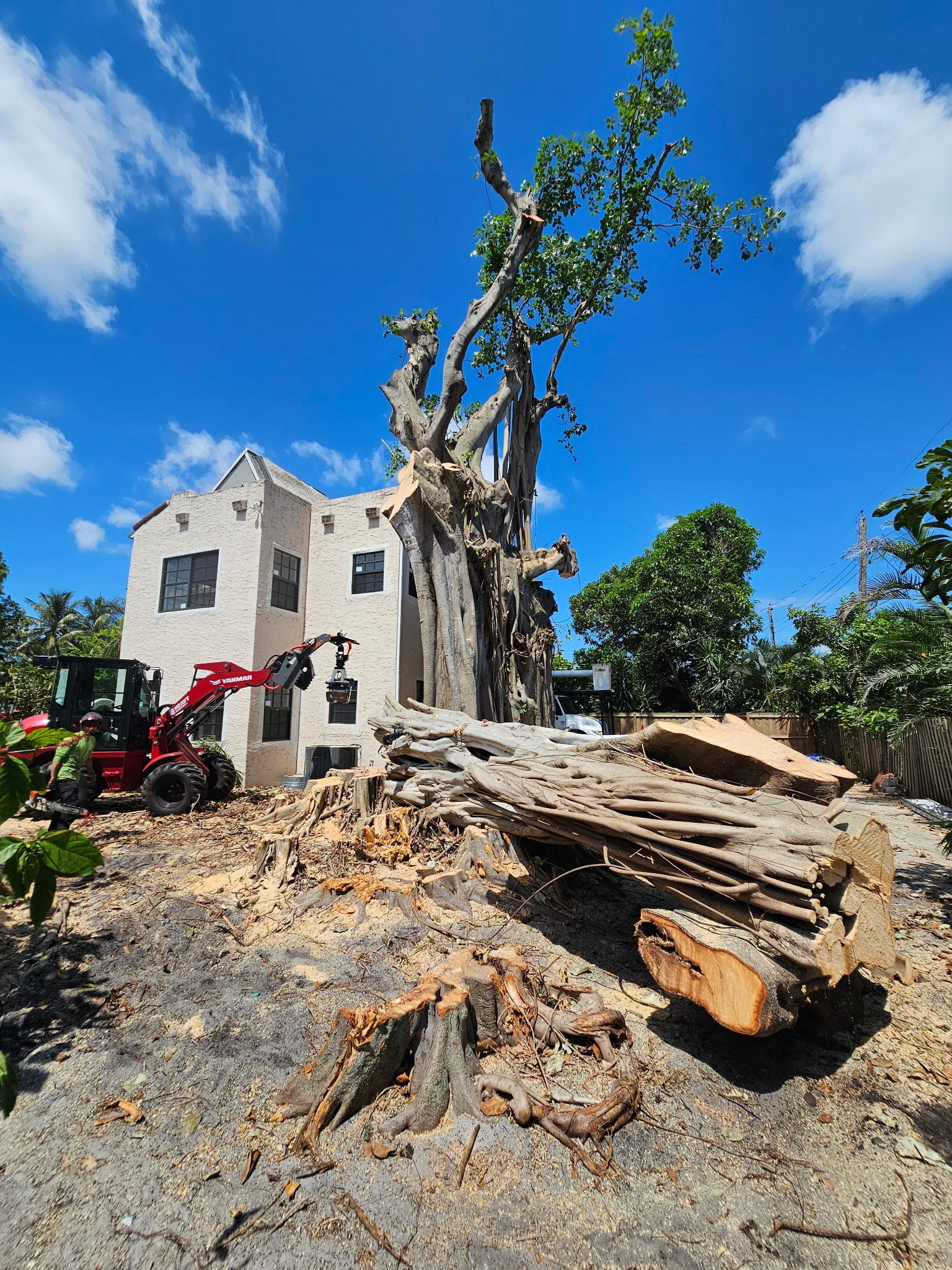
The lofty fig, as the banyan is called, had an expansive canopy that seemed to swallow the two-story, 95-year-old house at its base, a system of multiple trunks in the rear yard at 326 Fordham Drive.
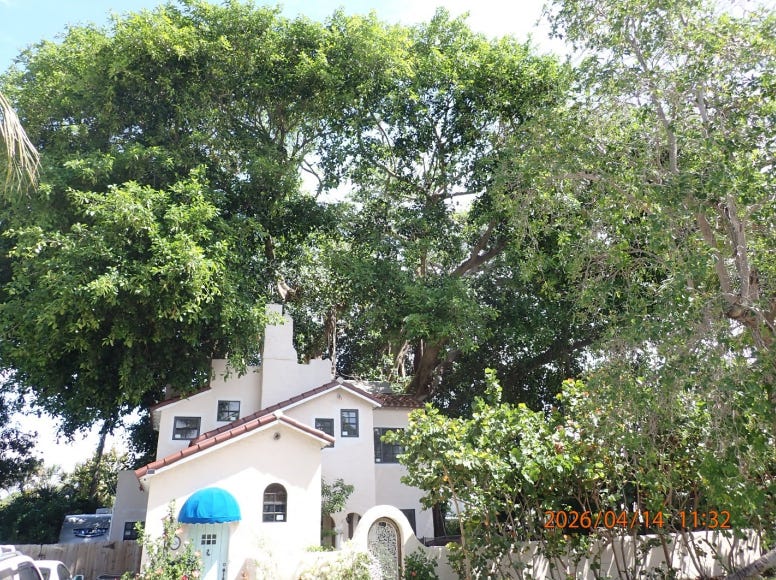
“I think it was probably 75 feet high and 150 feet wide,’’ said Keith Bell, who lived in the Mediterranean-revival house from 1997 to 2016 and noted the home’s symbiotic relationship with the tree. “It was really inspiring.’’
But the big old tree had seen better days and was presenting a danger to the home, according to a removal permit approved by the city for the current homeowner.
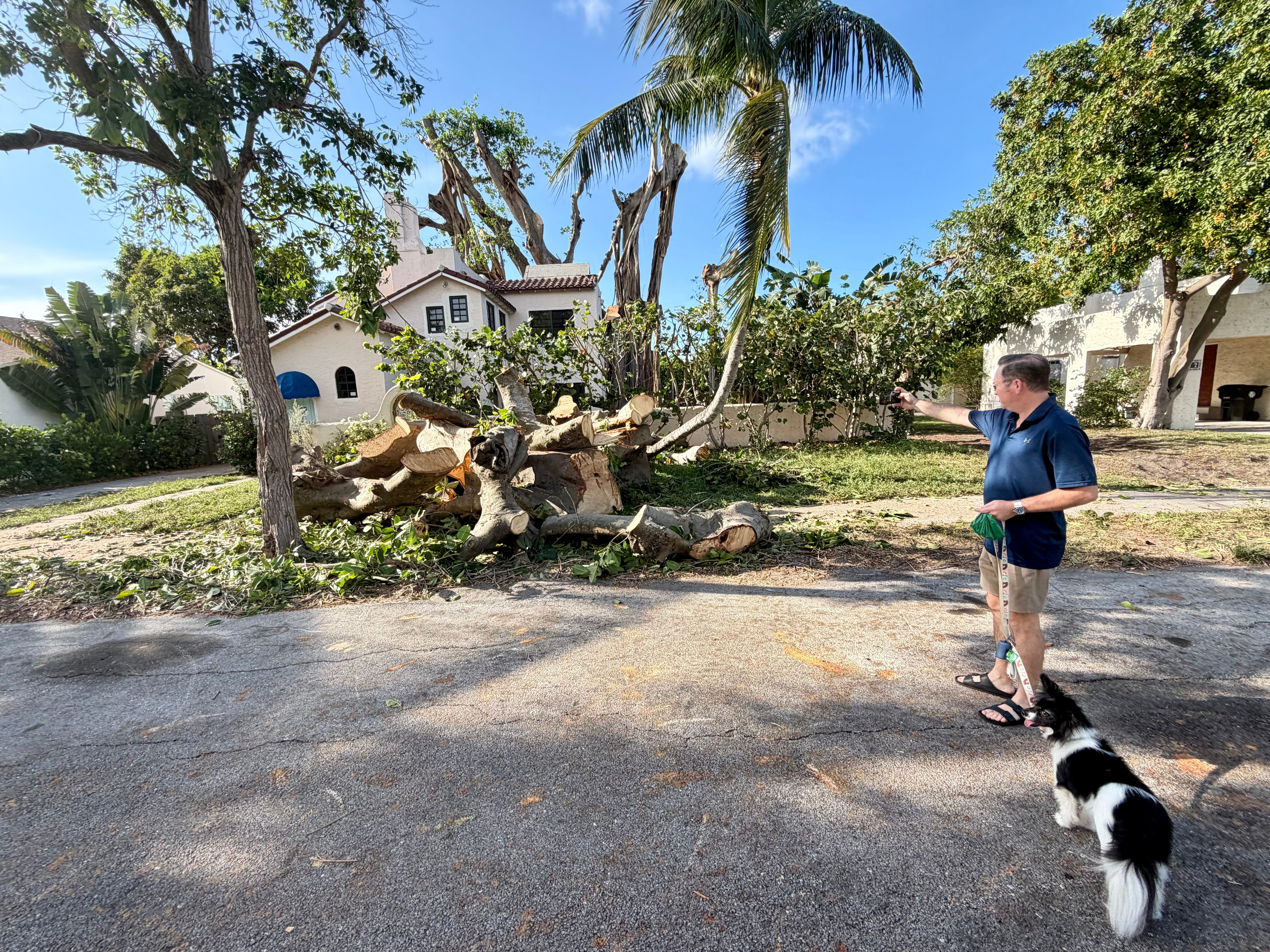
Earlier this week, crews from Farina Tree Care of Fort Lauderdale arrived with a fleet of specialized trucks and got to work.
It wasn’t long before neighbors took notice and called City Hall.
“I called code to make sure it had a permit and they had followed the rules,’’ said Vice Mayor Mimi May, who lives a few blocks from the tree.
“It’s heartbreaking to see such a beautiful tree go,’’ she said, echoing the sentiment of College Park residents who considered it much more than just a tree.
It was a leafy landmark, a longtime neighbor and colossal playmate.
“It is a tree the way the Titanic was a boat,” The Palm Beach Post wrote in 2001 when the green giant was listed as the No. 4 lofty fig in Florida’s statewide Big Tree list.
In aerial real estate photos, it looked like a green nuclear mushroom cloud over the north end of Lake Worth Beach.
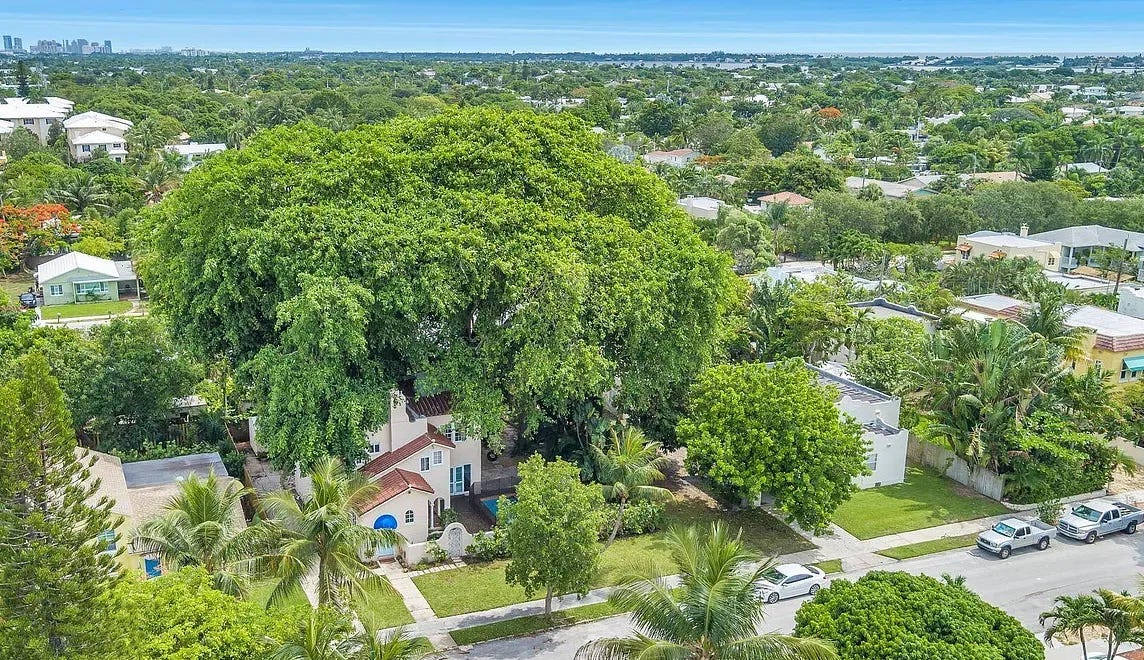
The massive canopy created its own weather system, dropping the temperature in the yard by 20 degrees with its ability to catch breezes and direct them downward.
“It turned that house into, like, a state park,’’ said Bell, who remembers his son and friends swinging from the branches and exploring its upper reaches.
But living in the cradle of a living behemoth came with challenges.
Bell said he bagged more than a ton of leaves in his first year at the house and spent about $1,000 a year to trim the branches.
In 2005, Hurricane Wilma sent a huge branch crashing into his son’s second-floor bedroom, memorialized in a front-page newspaper photo under the headline, “BULL’S EYE.”
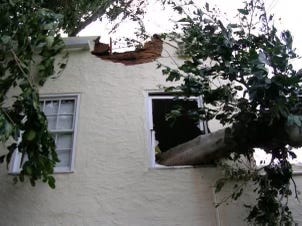
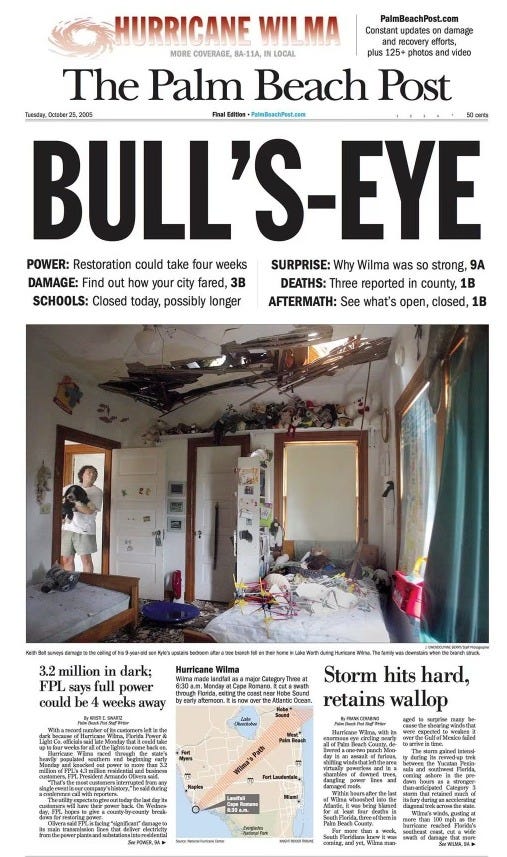
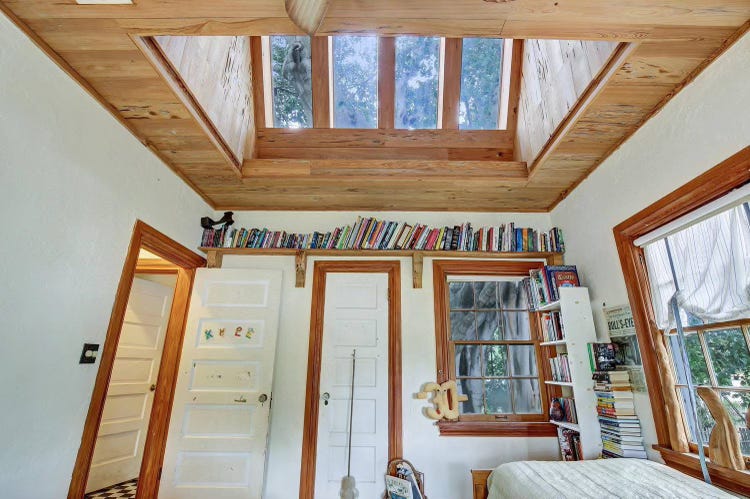
Bell repaired the roof by installing a skylight that allowed his son to gaze into the branches from his bed.
“There might have been times where I thought for a few seconds that the tree should be removed,’’ he said, “but never in a million years would I do that.’’
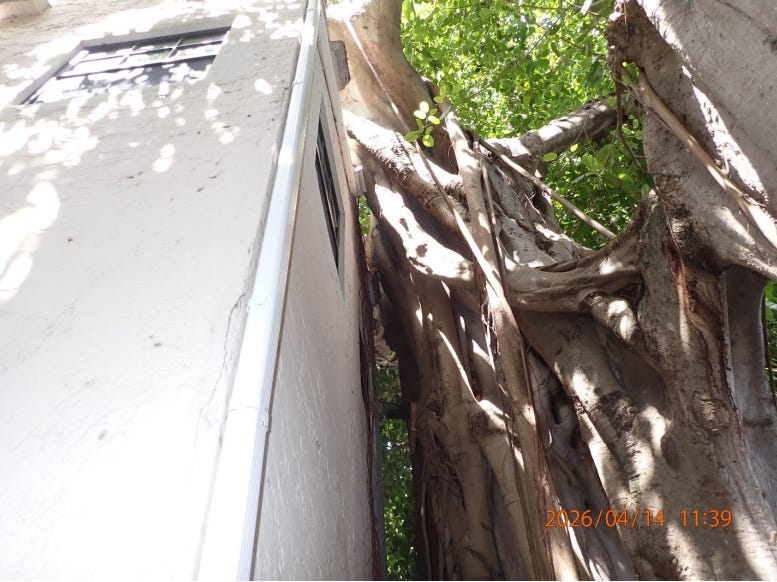
An arborist who inspected the tree in April recommended its removal after finding cracks in the patio and on the stucco on the side of the house.
“The largest trunk has grown within an inch of the wall of the house,’’ according to a report filed with the city.
“There is a crack in the stucco west of a back door/window that appears to be caused by a root that has gotten behind the stucco and wall,’’ the report says. “This needs immediate attention as it can cause major damage to the structure.’’
Bell, who lives about a half-mile from his old house, said he was shocked when he learned on Facebook about the tree’s removal.
“I haven’t gone over there. I can’t even go and look at it,’’ he said.
Talking to a reporter, he struggled to come to terms with the tree’s demise.
“Part of me understands, because of the (maintenance) hardship,’’ he said.
Bell said the house had a series of owners — before and after he lived there — who like him were attracted by the tree only to soon learn about the tree’s challenges.
That was the case with the current owner, Brian Peltyar, who bought the house in 2023 for $530,000, according to property records.
A year or so later, two massive pieces broke off, narrowly missing the house and landing in the yard, said Nick Farina, owner of Farina Tree Care.
A few months after that, a large section broke off directly over the house but became lodged in the lower branches. A 60-ton crane was used to remove the hanging branch.
The close calls prompted the owner to apply for the tree removal permit. The city gave the tree a 45% condition rating, meaning it was in “fair” but not ideal shape.
Its central trunk measured roughly 36 ½ feet, according to the permit, which also indicated the removal job cost at least $35,000.
“I am told that almost every tree service in the area looked at this tree,’’ Farina said via text. “Most of them said they couldn’t do it. The others had astronomical prices.’’
The owner, who could not be reached for comment, was eventually introduced to Farina by an arborist.
“I have developed a reputation in South Florida for being ‘the guy’ for the most difficult tree removal projects,’’ Farina said.
Farina, a certified arborist with over 15 years of experience in tree removal, said he is one of the few companies in South Florida that uses a specialized grapplesaw crane with a built-in, 20-inch hydraulic driven chainsaw.
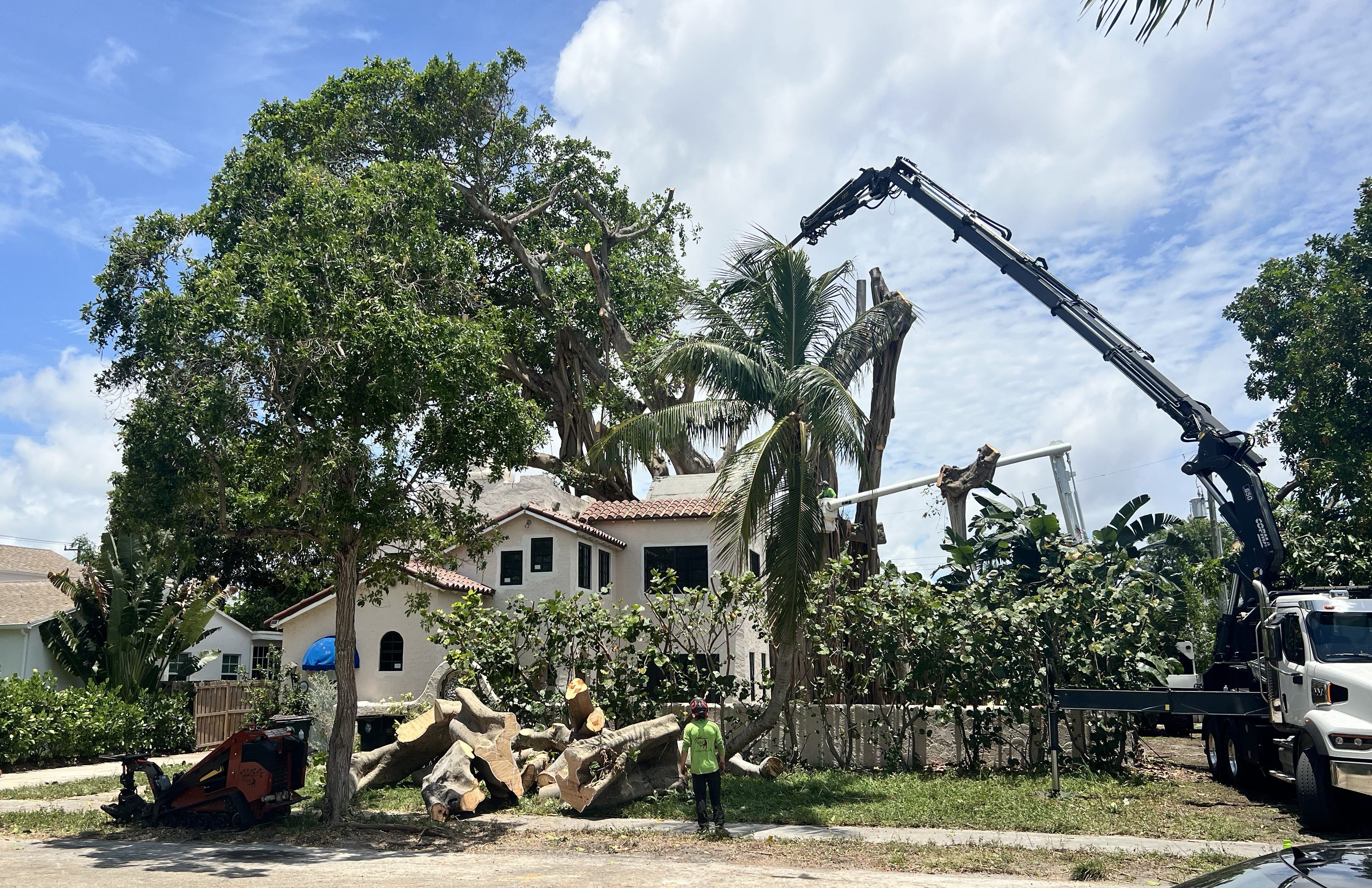
He said it will take up to eight days to remove the tree, which so far “has generated 208 cubic yards of wood chips and will produce almost 250 cubic yards of log debris.’’
“This is by far, the largest and most difficult tree removal of my career,’’ he said.
Neighbors said the tree crews arrived Monday. By Wednesday evening, the massive canopy was gone. All that remained Thursday morning were several trunks.
Once the entire tree is removed, a live oak with a trunk 6 inches in diameter, will be planted, according to the permit.
“It’s a bummer. It’s the end of an era,’’ Brent Bludworth, who lives across the street from the tree, said Wednesday as he watched the removal crews.
“After living here for over 30 years, this tree feels like a family member, so it’s sad to see it go,’’ he said.
“I also understand the financial burden the tree has caused the house. It’s a beautiful tree. I’m going to miss the shade.’’
(This story was updated at 11:51 a.m. on June 12, 2026, to reflect information from public records released earlier that day to the Lake Worth Beach Independent.)
Story was updated an hour ago to reflect new information obtained this morning from a public records request.
A 6-inch live oak?!? What is the point of that? Not a six-foot tree?